

Equipment-as-a-Service · Roundtable

Equipment-as-a-Service 2026 in Practice: 3 Manufacturers, 3 Models

The short version: Three manufacturers, three industries, three As-a-Service models – one shared logic behind how they built them.

Equipment-as-a-Service has arrived in medium-sized manufacturing. Not as a concept – as everyday practice. Lindner Recyclingtech, Gebr. Becker and d&b audiotechnik have three completely different EaaS models live in the market. In the Findustrial Roundtable on June 30, 2026 we brought them into a conversation and asked: What did you do differently?

In this article

This post is also available in: German

Context

Why this format

Equipment-as-a-Service has been discussed for years. But between “interesting idea” and “running in production” lies a whole different world. Anyone building the model in a medium-sized company knows this: the theory rarely matches the daily reality. Research at the Bosch IoT Lab (University of St. Gallen / ETH Zurich) has analyzed over 200 manufacturers and identified 66 recurring patterns. Patterns are useful. But they don’t replace an honest question to three practitioners: What was your biggest surprise?

That’s why we didn’t organize another lecture. We brought three manufacturers together who actively run their EaaS offerings today – in three industries that couldn’t be more different. Recycling, vacuum technology, professional audio. What connects these three worlds isn’t the product. It’s the pattern behind how they built their business model.

What you won't find here

No “EaaS maturity model”. No five success factors with asterisks. No slides from consulting decks. Instead: what three practitioners got wrong in year one, which sales question scared them the most, and where they deliberately don’t offer EaaS.

Speaker 01

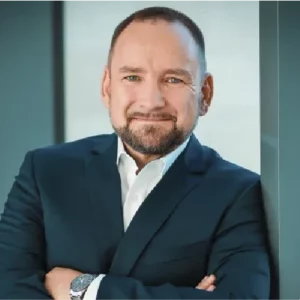
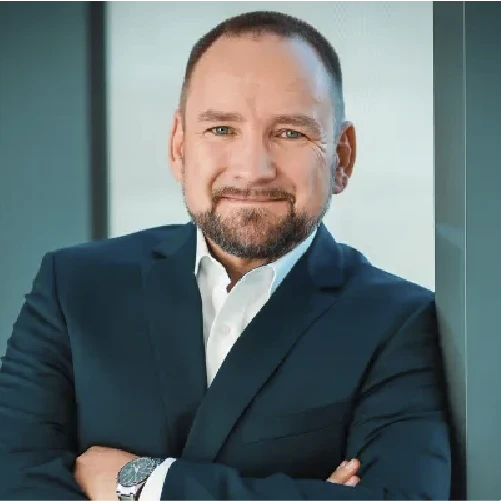
Matthias Holder · CSO · Lindner Recyclingtech

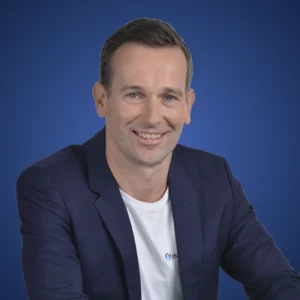
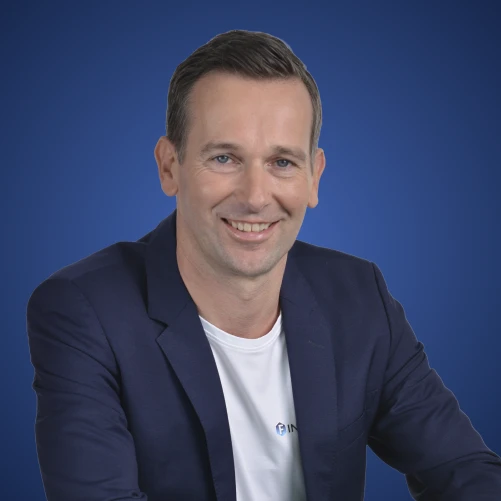
Matthias Holder, CSO of Lindner Recyclingtech
Performance-as-a-Service · Recycling · Findustrial Pioneer

Matthias Holder launched Performance-as-a-Service at Lindner, the EaaS offering of the Austrian shredder specialist. Lindner still sells machines, rents them out, and now additionally offers Performance-as-a-Service – three models, three customer profiles, one portfolio. What made this step possible is Holder’s background in the printing and packaging industry. Service-based business models have been established there for years. What’s new in recycling, he’s already seen work elsewhere.

Why Performance-as-a-Service - and what role does your print background play?
"In printing and packaging, these models have been established for twenty years. Any professional office printer today isn't purchased anymore - it's billed per copy. Exactly the same is happening with large digital printing machines and packaging machinery. The shift from CapEx to OpEx through leasing and usage-based models is standard practice today. So for me, it was only logical to say: let's do this with our large shredders too."
Matthias Holder, CSO of Lindner Recyclingtech
Matthias Holder
CSO | Lindner Recyclingtech

In practice: Lindner currently offers Performance-as-a-Service exclusively for mobile shredders, not for fixed installations. The target customers are recycling yards and similar operators with fluctuating utilization, changing material streams, and only temporary contracts with their own off-takers. Above a base utilization, the rental payment scales flexibly with actual usage. Lindner handles maintenance and availability, retains ownership, and can remotely monitor machine conditions via its in-house Nexus system.

The pattern behind it:

Holder’s answer isn’t theory – it’s lived pattern transfer from his own past. Printing and packaging made the shift from machine sales to service relationships two decades ago. What looks new in recycling, Holder has already experienced and helped drive elsewhere. He calls it a cross-industry trend: the conversion of CapEx into OpEx through leasing and usage-based models is now “standard practice.” Research at the Bosch IoT Lab describes exactly this as a recurring success factor: EaaS models rarely emerge from nothing – they emerge through transfer of proven mechanics from neighboring industries.

Which customer is Performance-as-a-Service right for - and which one it isn't?
"We offer the complete bouquet. There's the classic customer who says: I want to own the machine, I'll buy it. There are leasing models through partner banks. And then we get to the highest level of the service contract - Performance-as-a-Service. That's where we go with customers who have unclear or rapidly changing business models, who depend on customer contracts, who can't give reliable forecasts."
Matthias Holder, CSO of Lindner Recyclingtech
Matthias Holder
CSO | Lindner Recyclingtech

In practice: Lindner offers three models in parallel – purchase, traditional leasing through partner banks, and Performance-as-a-Service. The purchase customer knows exactly what they need and has the capital. The leasing customer wants to spread investments over the balance sheet. The PaaS customer has unclear or rapidly changing business models and can’t forecast utilization peaks. Distribution runs through a two-tier model with service partners. Contractually it’s a triangular structure: only Lindner has the contract with the customer, the partner acts as a service execution partner. PaaS contract terms are between one and four years – no longer, because a professionally used shredder needs a full overhaul after four years. After that, the equipment goes into secondary market resale. Holder puts it memorably: “We’re breeding our own quality used machines.” That’s not a side effect – it’s strategic secondary use. EaaS and the used market support each other.

The pattern behind it:

Holder calls it the “complete bouquet.” Purchase, leasing, and EaaS aren’t maturity levels on a scale – they’re parallel options for different customer profiles. This three-model logic surfaces with all speakers in the roundtable. Anyone positioning EaaS as a replacement for the core business builds internal resistance. Anyone offering it as an additional portfolio option gains sales and the CFO as allies.

Holder’s rental car analogy. What does a customer get after four years? Holder: “A new machine doesn’t mean brand new. If the customer wants to continue with the model, they get a new machine – but that can very well be a fully refurbished one. I always compare it to a rental car. A rental car isn’t always a brand-new vehicle with zero miles. But it’s a car that does exactly what it should – get you from A to B.” That’s the core logic of Performance-as-a-Service in one sentence: the customer buys performance, not ownership. What sits behind it – refurbished, new, or fully overhauled – is the provider’s concern.

Speaker 02

Dr. Martin Ebel · Director Business Transformation · Gebr. Becker

Portrait of Dr. Martin Ebel, Director Business Transformation at Gebr. Becker
Vacuum-as-a-Service · Vacuum Technology · Findustrial Pioneer

At Gebr. Becker, Dr. Martin Ebel is driving the transformation from classical vacuum pump manufacturer to service provider. An industry where service models barely existed before – even though the direct neighbor industry, compressed air, has been doing this for years. Ebel combines science and operational practice: he’s been working on servitization for years and is simultaneously driving implementation at Becker. That gives his answers a double depth – research and practice in one person.

Compressed-Air-as-a-Service is established. Why isn't vacuum there yet?
"Compressed air was familiar to us and we saw it a bit as a blueprint. But we deliberately didn't start with our core pump business - we started with central systems, a market that's new to us and where we're not directly disrupting ourselves. For any listener, it's usually best to start where you don't directly disrupt yourself."
Portrait of Dr. Martin Ebel, Director Business Transformation at Gebr. Becker
Dr. Martin Ebel
Director Business Transformation, Gebr. Becker

In practice: Becker originally started thinking about EaaS coming out of a digitization initiative for their vacuum pump components. It quickly became clear: components alone don’t market well as a service. Becker pivoted the approach and entered EaaS with central systems – a market new to Becker. There, they found a clear end-customer business with integrated controls and transparent data. The value proposition to the customer: up to 50 percent energy savings versus decentralized vacuum solutions, and without capital investment. Ebel deliberately positions EaaS as the final maturity stage of the service contract – from purchase to classic maintenance contracts to full service and finally to Vacuum-as-a-Service. Ebel offered one hypothesis for why compressed air moved faster than vacuum: pressure vessels have to be inspected annually, vacuum vessels don’t. That might explain why service business established itself more strongly in the compressed air market – it’s regulatory-driven. A personal anecdote from Ebel: Becker itself sources compressed air through a contracting model for its own factory in Wuppertal. That helped him understand how internal procurement processes work at customers and where the decision lever sits.

The pattern behind it:

Ebel’s most important sentence in the roundtable came almost as a side note: “For any listener, it’s usually best to start where you don’t directly disrupt yourself.” Becker didn’t try to convert the core pump business to EaaS – they introduced it via a new market. Wortmann, Gebauer, Lamprecht and Fleisch (2024) describe this strategy as an Adjacency Pattern: manufacturers deliberately choose an adjacent market segment for their EaaS entry rather than their core business, to avoid internal resistance. Most failed EaaS initiatives fail not because of the market but because of exactly this internal resistance. Becker avoided it structurally.

Vacuum systems often have customer-specific components. How do you handle that?
"For customer-specific piping we found a pragmatic solution. The piping isn't part of the Vacuum-as-a-Service contract, because we can't take it back and reuse it elsewhere - it's designed for exactly this one customer. So it runs as rent-to-own over five years. The customer pays it off in monthly installments and afterwards it belongs to them. The pumps and control systems stay with us, the piping stays with the customer."
Portrait of Dr. Martin Ebel, Director Business Transformation at Gebr. Becker
Dr. Martin Ebel
Director Business Transformation, Gebr. Becker

In practice: Becker separates two asset classes in the contract. The vacuum pumps stay in Becker’s ownership, are billed as pure subscription with a monthly fixed rate, and get fully overhauled after 20,000 operating hours. The piping, by contrast, runs as rent-to-own: over the first five years the rates are higher, after that the rate drops and ownership of the piping transfers to the customer. Contract terms: minimum five years, up to fifteen years depending on the overhaul interval. The pilot currently runs exclusively in the DACH region – international rollout is deferred until they have first scaling experience.

The pattern behind it:

Becker’s rent-to-own solution is a recurring pattern for EaaS models with highly customer-specific components. What can’t be taken back and reused elsewhere can’t stay in the provider’s ownership – otherwise residual value risk eats the margin. Separating reusable core equipment from customer-financed extensions is one of the key patterns from Wortmann et al. (2024). Becker implemented this practically by running vacuum pumps as subscription and letting piping transfer to the customer via rent-to-own.

Speaker 03

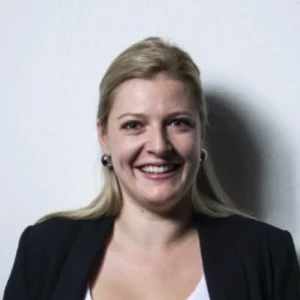
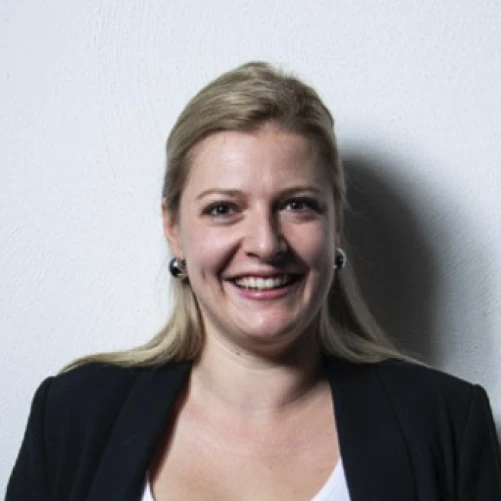
Alina Bösch · Lead of Sound as a Service · d&b audiotechnik

Alina Bösch, Lead of Sound-as-a-Service at d&b audiotechnik
Sound-as-a-Service · Professional Audio · External case study

Alina Bösch leads the global Sound-as-a-Service business at d&b audiotechnik. Her story shows a point we see repeatedly with EaaS pioneers – but rarely as clearly articulated. Sound-as-a-Service already existed at d&b in a proto-form, with a few paying customers, but without system. Bösch took it over and professionalized it. Ad-hoc service turned into a systematic, globally available offering.

You didn't build Sound-as-a-Service from zero, you professionalized it. What were the milestones?
"At the beginning there was resistance inside our own company. A colleague came to me very directly and said he'd never sell this. Earlier this year, he brought in the first deal. I have to admit, that made me very proud. It played out similarly with our partners - it wasn't a company or a big campaign, it was individual people who understood what the model meant for them."
Alina Bösch, Lead of Sound-as-a-Service at d&b audiotechnik
Alina Bösch
Lead of Sound as a Service, d&b audiotechnik

In practice: Bösch structures the milestones in two categories. External milestones: EMEA contract structure finalized, then rollout in the US, Canada, Singapore and Japan. The key proof for her: the model works outside the home market too. Internal milestones: in the beginning, processes weren’t developed, internal communication was in its infancy. Over four years, digitization steps were built up – automated invoicing, automated credit checks, service reminders to partners, remote monitoring. What was a high-explanation product turned into a scalable structure.

The pattern behind it:

Across seventy-plus EaaS projects, we see this pattern repeat: internal resistance is usually the first convert. The colleague who says loudest “this will never work” is often the one who brings in the first deal – provided they’re not ignored but actively brought along. The professionalization phase is the most underestimated in EaaS development. It’s not the first model that decides, it’s the tenth similar one. Anyone still doing everything individually with the first customer doesn’t have a business model yet – they have a project. Bösch’s story shows what sits between these two worlds: patient conviction work inside the company and with the partner network, plus the consistent digitization of recurring processes.

Sound-as-a-Service runs entirely through partners. How does that work contractually?
"Only d&b holds the customer contract. It's essentially a triangular contract structure: d&b signs a contract with the service partner and one with the customer. There's no direct contractual agreement between the service partner and the customer."
Alina Bösch, Lead of Sound-as-a-Service at d&b audiotechnik
Alina Bösch
Lead of Sound as a Service, d&b audiotechnik

In practice: d&b operates exclusively through a partner network – no direct sales. In the contract structure, the partner is formally a “service execution partner” but carries the actual service responsibility in the field. Bösch describes scaling as three layers of conviction work: first the internal sales team has to be won, then the partner network, then the end customer. Each layer has its own concerns and needs its own arguments. The central premise for partner incentives from the start: partners must not be worse off than with a classic sale. Beyond that, there’s an intensification program. Contract terms have evolved: originally two years, today three to four years as standard – for fixed installations that sometimes stay in use for thirty years. Bösch has rolled out the model globally: US, Canada, first contacts in Asia.

The pattern behind it:

The triangular contract structure appears twice in the roundtable – at d&b and at Lindner. Both chose the same logic: only the manufacturer has the contract with the end customer, the partner acts as a formal service execution partner. In the research by Wortmann et al. (2024), this is described as a triadic business model – one of the recurring patterns for EaaS providers that scale through a partner network. It protects the customer relationship while still enabling service delivery in the field. Becker doesn’t go this route (yet) because they’re working directly with end customers in the DACH pilot. Anyone wanting to internationalize EaaS through partners will have a hard time avoiding this contract architecture.

Synthesis

What all three have in common

Three manufacturers, three industries, three As-a-Service models. Plus Günter’s framework from over seventy EaaS projects. The easy answer would be: “every case is different.” But that’s not true. There are patterns that show up in all three stories.

Pattern transfer, not invention

None of the three invented their EaaS model from scratch. Holder brings print/packaging experience into recycling. Ebel adapts what compressed air has done for years into vacuum. Bösch builds on an existing proto-form at d&b. Successful EaaS models emerge through transfer, not invention. That aligns with the academic observation: the 66 patterns from research by Wortmann et al. (2024) are exactly that - recurring, transferable building blocks.

Three-model portfolio, not replacement

None of the three shut down the traditional business. Lindner runs purchase, leasing and Performance-as-a-Service side by side. Becker offers equipment for purchase, with a full service contract, or as Vacuum-as-a-Service. d&b sells speakers and Sound-as-a-Service in parallel. Holder captured the logic in one line during the roundtable: "the complete bouquet - as long as the customer takes one of them." EaaS is an additional portfolio option, not a replacement for something that works. Research knows this as the answer to the Service Paradox - a central observation by Gebauer and colleagues: those who position service models as a replacement for the product business lose sales, CFO and board internally. Those who position service as an additional option win them as allies.

Operational responsibility shifts

In all three cases, the manufacturer takes on tasks that used to belong to the customer. Guaranteeing availability. Monitoring performance. Reacting before the customer complains. Ebel put it precisely in the roundtable: the jump from reactive to proactive service is the final maturity stage of the service contract. Lindner has its Nexus system with predictive maintenance capabilities. Becker relies on remote monitoring to save site visits. d&b uses a remote monitoring panel across all running systems. This doesn't come on the side. It requires service infrastructure, telemetry, and an operating model that fundamentally differs from a machine builder's. Anyone doing EaaS stays present in the customer's business instead of leaving them at delivery.

Pricing follows product character

Three manufacturers, three different pricing logics - but no coincidence. Lindner bills by operating hours with a minimum commitment - classic hybrid usage logic because utilization fluctuates with the customer's material stream. Becker runs pure subscription with a monthly fixed rate and operating-hours cap - full supply where consumption patterns are hard for the customer to predict. d&b also runs subscription because usage of their systems in fixed installations is predictable. The underlying pattern: the more volatile the customer's utilization, the more usage-based the pricing. The more predictable the usage, the more subscription-based. Anyone who doesn't align their pricing model with the product's character ends up with either a model that scares the customer or one that eats the provider's margin.

Speaker 04 · Findustrial Framework

Günter Hehenfelder · What makes a product EaaS-ready?

Günter Hehenfelder, Co-Founder and CEO of Findustrial

Günter Hehenfelder is the founder and CEO of Findustrial and has worked on more than seventy EaaS projects with his team. From vacuum to industrial robotics, from recycling to energy. From that range, one question comes up again and again: how do you actually tell whether a product is EaaS-ready? In the roundtable, Günter gave a very clear answer – four characteristics that need to come together.

"It’s less a question of the industry or the customer segment, and more a question of the product’s characteristics. In the models we’ve worked on that work in the market, a similar combination shows up again and again."
Günter Hehenfelder, Co-Founder and CEO of Findustrial
- Günter Hehenfelder, Findustrial

In practice: Günter names four characteristics that come together in working EaaS models:

Meaningful investment hurdle

The investment has to be big enough that it becomes an approval or budget topic at the customer. Especially in times of tight investment budgets or capex freezes, the usage-based model often becomes the only chance to get a decision in the market at all.

Measurable, immediately understandable customer value

The kilowatt-hour from your own PV system that costs less than grid power. The robot-hour that’s significantly cheaper than the labor hour. When the benefit is that direct, the model almost sells itself - instead of long payback calculations that have to run through approval loops.

Residual value and standardization

Standardized equipment retains residual value and can be repurposed. Customer-specific equipment doesn’t. In the best case, this turns into a circular model where the asset stays with the provider throughout its entire lifecycle.

Complexity belongs with the manufacturer

When the technology is so complex that customers can’t handle the service in-house, EaaS is the natural answer. That’s why robotics is currently the fastest-growing EaaS market - customers often simply lack the know-how to operate the equipment themselves.

The pattern behind it: Günter’s four characteristics are the practical distillation of what research at the Bosch IoT Lab describes as Fit Assessment. In the PaaS Navigator by Wortmann, Gebauer, Lamprecht and Fleisch (2024), the question of whether a product is EaaS-ready is treated as the first and most important stage of model design – before any pricing, contract, or refinancing question. Günter puts it explicitly: ideally all four characteristics come together, and then the model definitely flies. But probably three are enough. What makes this list valuable is the reverse view: if you only have one or two of these characteristics, don’t start EaaS yet. The fit question comes before everything else.

Contract terms and asset ownership compared

Three manufacturers, three very different contract terms. Holder at one to four years. Becker at five to fifteen. d&b at three to four. At first glance this looks arbitrary. But in the roundtable, Claudio Lamprecht named the connecting principle: “The lower the switching costs and the more standardized the product, the shorter the contract can be.”

That’s exactly the logic the table makes visible. If you offer mobile shredders (Lindner), one year works because taking the machine back is physically easy and redeploying it at another customer is feasible. If you offer central systems with fixed piping (Becker), you need longer terms because part of the equipment is no longer mobile and the residual value risk has to be distributed differently. If you offer sound systems for fixed installations (d&b), you sit in between.

ManufacturerContract termAsset ownershipSpecial structure
Lindner (Performance-as-a-Service)1-4 yearsStays with Lindner. After 4 years, full overhaul and resale on the secondary market – Holder: “We’re breeding our own quality used machines.”Triangular contract with service partner as execution partner. Only Lindner has the customer contract.
Becker (Vacuum-as-a-Service)5-15 yearsVacuum pumps stay with Becker. Piping transfers to customer ownership after 5 years.Piping as rent-to-own. Higher rates in the first 5 years, then ownership transfers. Pilot exclusively in DACH.
d&b (Sound-as-a-Service)3-4 years (originally 2)Stays with d&b. Returned at end of contract or for overhaul.Triangular contract with audio partner. Global scaling through partner network.
The pattern behind it:

Contract term isn’t a sales lever – it’s a function of the equipment’s physical and economic characteristics. The more standardized and mobile the asset, the shorter the contract can be. The more customer-specific and fixed the installation, the longer the refinancing period has to be. Anyone designing an EaaS contract as a manufacturer has to ask this question first: what happens physically and economically if the customer exits after three, five, or ten years? The answer determines the contract term – not the other way around.

What isn’t visible in the table but came up repeatedly in the roundtable: the contract term also determines the refinancing architecture. Anyone holding assets in ownership has to either fund the investment upfront from their own balance sheet or structure it with a refinancing partner. For short terms under five years, the own balance sheet often works. For longer terms, external refinancing is practically required – if only for working capital reasons. Wortmann, Gebauer, Lamprecht and Fleisch describe refinancing as one of the three key topics that let EaaS models fail when addressed too late. Sales arguments and service offerings are visible. Refinancing is the silent factor that becomes visible at scale.

Who's liable when the machine stops?

"It's not that every minute a machine stands still gets immediately compensated somehow. We have certain response times built into the service side."
Matthias Holder, CSO of Lindner Recyclingtech
- Matthias Holder, Lindner
"We explicitly excluded production losses. We warrant what we say - certain response times. If we miss them, it goes into penalties in the end."
Portrait of Dr. Martin Ebel, Director Business Transformation at Gebr. Becker
- Dr. Martin Ebel, Gebr. Becker
"For us, the service mindset comes above everything. We don't take on liability for the event itself - if it gets canceled or if something goes wrong somewhere in the workflow, that's not our risk. But the machines have to run. That's why we built up remote monitoring, errors are flagged immediately, updates get pushed remotely. Preventive maintenance every six months. Our partners have spare parts on site."
Alina Bösch, Lead of Sound-as-a-Service at d&b audiotechnik
- Alina Bösch, d&b audiotechnik

In practice: All three use the same three mechanisms to structure the availability risk:

  • Availability guarantees instead of production-loss liability. The provider guarantees an availability rate, not a specific business outcome at the customer.
  • Response times with SLA penalties when they aren’t met. That’s the monetary consequence, not taking on the customer’s risk.
  • Predictive or remote monitoring to anticipate failures. Lindner is furthest along with the Nexus system – they see impending failures and can intervene proactively. Becker and d&b use remote monitoring primarily to save on-site visits.

One important detail from Holder: Operator errors stay with the customer. If simple maintenance like greasing wasn’t done, that doesn’t transfer to provider liability. Becker has additionally excluded inflation risks in the contract – price adjustments follow the market index in both directions.

The pattern behind it:

What the three describe is the line between equipment responsibility and business responsibility. EaaS shifts equipment ownership from the customer to the manufacturer. What it doesn’t shift is business continuity. No EaaS provider takes on liability for production losses – the business risk stays with the customer. What the provider guarantees is an availability rate and response time. Wortmann et al. (2024) describe this separation as a Risk Allocation Pattern and as a precondition for EaaS being insurable and refinanceable at all. Anyone mixing the two risk layers fails at the contract. That makes Service Level Agreements mandatory homework before the first live contract.

Where the model doesn't work

Where EaaS doesn't work

The most important question of the panel wasn’t “where does it work” but “where do you deliberately exclude it.” Three manufacturers negotiating EaaS contracts daily know better than any analyst where the limits are.

"We're going to market with Performance-as-a-Service currently only for our mobile machines. There are also fixed installations integrated into recycling systems. We're not active with the model there yet."
Matthias Holder, CSO of Lindner Recyclingtech
- Matthias Holder, Lindner
"Cross-border I can't say much yet, because we're starting the pilot exclusively in the DACH region."
Portrait of Dr. Martin Ebel, Director Business Transformation at Gebr. Becker
- Dr. Martin Ebel, Gebr. Becker
"Sound-as-a-Service fits perfectly for customers who don't get classic financing - club operators, startups, restaurants. Where it gets harder is with chaotic customers who have unstructured processes. The model isn't built for touring or short-term event formats."
Alina Bösch, Lead of Sound-as-a-Service at d&b audiotechnik
- Alina Bösch, d&b audiotechnik

In practice: The concrete exclusion criteria from the roundtable sort into four recurring themes:

  • Fixed and highly customized installations: Lindner currently runs PaaS only for mobile shredders, because integrated systems are hard to take back.
  • Components without end-customer relevance: Becker dropped the components business for EaaS because it doesn’t create direct customer value. Only the shift to central systems made the model viable.
  • Cross-border scaling before first experience: Becker deliberately keeps the pilot in the DACH region before scaling internationally. Customs and ownership issues in cross-border EaaS are complex enough not to solve them in parallel with model design.
  • Steady utilization with capital: Holder made the classic distinction in the roundtable. Municipal operations with steady utilization tend toward purchase. PaaS only takes off where utilization fluctuates and customer business models can’t be forecast.
The pattern behind it:

The pattern research at the Bosch IoT Lab calls this Fit Assessment – the structured question of whether a product and customer profile fit EaaS at all before entering the pilot phase. Most failed EaaS initiatives don’t fail from a missing use case but from the wrong use case. Anyone who defines early where EaaS doesn’t fit focuses energy on the cases that work. Anyone skipping this burns pilot resources.

Why this question matters more than the others

Three manufacturers actively running their own models are the only ones who can answer this honestly. External consultants and analysts usually describe EaaS use cases in the conditional. Holder, Ebel and Bösch describe them in the indicative – because they decide daily whether to accept or reject a contract. The pricing spectrum logic helps here: not every product supports every pricing model, and not every customer is EaaS-ready.

Takeaways

Key takeaways for your company

Perhaps the most surprising piece of advice in the roundtable came from Martin Ebel: “It’s usually best to start where you don’t directly disrupt yourself.” Becker did exactly that. Instead of testing EaaS on their core pump business, they started with central systems – a new market for them. That’s not coincidence, it’s deliberate strategy. Anyone positioning EaaS head-on against the existing business fights internally on three fronts at once – sales, CFO, and the board. Anyone finding an adjacent market where no one loses when EaaS wins has clear runway.

"If you want to start, our recommendation is always: begin with a proof of concept. The most important advice up front - don't go too big or too complicated, start small. Prove it, then standardize, then scale. For the proof of concept there are three things: a sharply defined product-and-service bundle, pricing calculated cleanly, and contracts designed from the start to be refinanceable later. Bring the CFO in early - that's a must. Ideally the offer fits on one page. Otherwise neither the customer nor your own sales team will understand it."
Günter Hehenfelder, Co-Founder and CEO of Findustrial
- Günter Hehenfelder, Findustrial

From this principle follow three concrete steps that Günter Hehenfelder outlined at the end of the roundtable.

Start small, not big

Better to have a first prototype out in the field quickly than to spend two years writing a doctoral thesis that disappears in the drawer. Prove it, then standardize, then scale. After one hundred days, the first friendly customer should be on a contract - that's Günter's concrete benchmark from more than seventy EaaS projects.

Define a sharply outlined bundle

One equipment type, the matching services, one customer segment, one region. Not the entire portfolio. And ask early: why should the customer want this in an EaaS model in the first place? The offer has to fit on one page - otherwise neither the customer nor your own sales team will understand it. On pricing, Günter warns explicitly: "Don't price with belt and suspenders - or you price yourself out of the market." Better to calculate it cleanly than to double-hedge. Anyone building every risk premium into the price sells nothing.

Design for refinancing from day one

The contract framework has to be refinanceable from the start. Bringing the CFO in early is mandatory, not nice-to-have. If refinancing only gets addressed after the pilot, the rude awakening comes at scale. Sales and service are the visible topics. Refinancing is the silent topic that lets EaaS models fail when it comes too late.

Next steps

Where are you on your EaaS journey?

We help medium-sized manufacturers go from concept to first live contract in 100 days. Book a discovery call, review your current state, plan next steps.

Stay in the loop.

Monthly newsletter with the most important EaaS developments, Pioneer insights, and practical templates.

You are currently viewing a placeholder content from HubSpot. To access the actual content, click the button below. Please note that doing so will share data with third-party providers.

More Information

Continue reading

Sources: Wortmann, Gebauer, Lamprecht & Fleisch (2024). Understanding Products as Services. Emerald Publishing. 66 PaaS Patterns aus über 200 Herstellern. | Bosch IoT Lab – The St. Gallen EaaS Navigator. | EaaS Roundtable Findustrial, 30. Juni 2026. Online-Format. Speaker: Matthias Holder (Lindner Recyclingtech), Dr. Martin Ebel (Gebr. Becker), Alina Bösch (d&b audiotechnik). Findustrial Pioneers: Lindner, Becker. d&b audiotechnik: externer Erfahrungsbericht, kein Findustrial-Kunde. | Findustrial Erfahrung aus 75+ EaaS-Projekten.

We’re redirecting you to: flexible-finanzierung.at

This platform is tailored for equipment buyers and operators who want to apply for flexible asset financing.

Findustrial specializes in EaaS | flexible-finanzierung.at covers all financing services beyond EaaS.